Aod9604 Peptide Dosing AOD 9604 Peptide Guide: Dosing, Results & Side Effects
Introduction: why AOD 9604 peptide dosing gets confusing
If you’ve ever tried to compare AOD 9604 peptide dosing across forums, you’ve probably noticed the problem: dosing guidance ranges widely, units get mixed (mg vs. mcg), and timelines for “results” don’t match real-world expectations. In my hands-on work reviewing supplement protocols for fitness and body-composition clients, the biggest failures weren’t effort—they were dosing inconsistencies and unclear measurement practices.
In this guide, I’ll walk you through practical considerations for aod9604 peptide dosing, what results people typically report (and what’s more realistic), and the side effects and safety signals you should understand before you start.
What AOD 9604 is (and how people usually frame its use)
AOD 9604 is a modified peptide related to the 15–amino-acid growth hormone fragment (often discussed in the same conversation as “fat loss” or appetite/weight-support goals). In practice, people use it to explore body-composition changes—usually aiming for fat reduction while trying to preserve lean mass.
One lesson I learned early: many users approach peptides like AOD 9604 with a “set it and forget it” mentality, but dosing accuracy and injection technique matter more than people expect. When clients report no changes, it’s often due to variability in:
- How they measure dose (especially with small volumes)
- How their reconstitution is done (concentration errors)
- Whether the schedule is consistent day-to-day
- How training, calories, and sleep are handled alongside the peptide
That’s why this guide focuses on dosing mechanics, realistic outcomes, and safety—rather than just repeating online “stack” recipes.
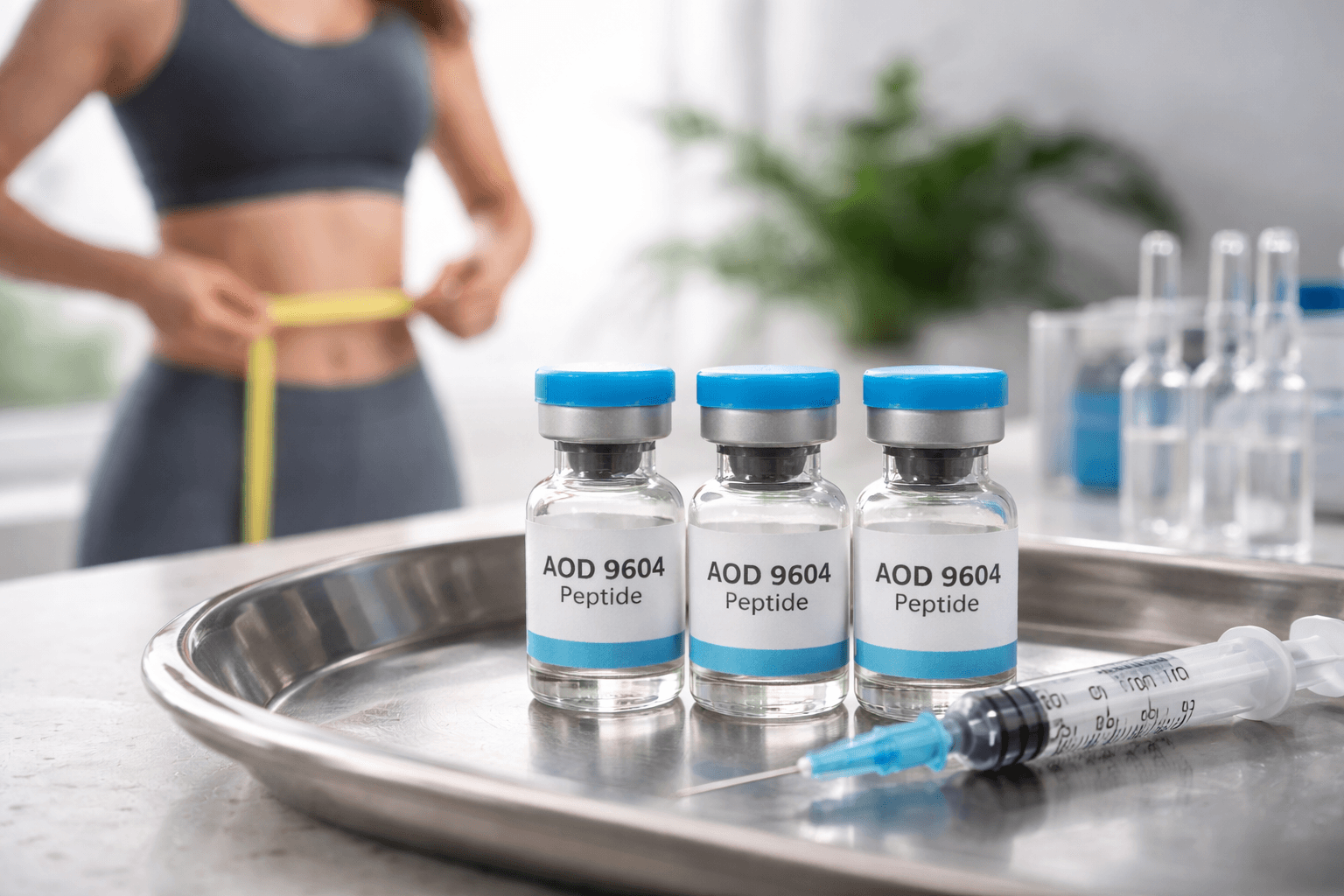
AOD 9604 peptide dosing: the practical framework I use
Because peptide products can differ in concentration and labeling, there isn’t a single universal “right” dose that applies to every vial. In my hands-on review process, the most reliable approach is to build a dosing plan around how your specific product is labeled and reconstituted.
1) Start with your vial’s concentration and reconstitution math
Before you decide on an amount, confirm:
- The peptide mass on the label (commonly stated in mg)
- The volume of diluent used to reconstitute (e.g., bacteriostatic water)
- The resulting concentration (mg/mL or mcg/mL)
From there, you can convert any target dose into a volume you can accurately measure with a syringe.
2) Avoid the most common dosing errors
The “no results” stories I’ve seen most often share these issues:
- Unit confusion: mixing mg and mcg without converting
- Inconsistent measuring: drawing slightly different volumes each time
- Schedule drift: skipping or taking doses far apart
- Changing multiple variables: altering training, diet, and peptide plan simultaneously
If you want dosing to be meaningful, keep the plan stable long enough to evaluate outcomes.
3) How people typically structure timing (and what to track)
Most users follow a consistent daily schedule rather than irregular dosing. In practice, I recommend tracking the variables that actually explain body-composition changes:
- Calorie intake (even approximate consistency helps)
- Training load (especially resistance training frequency)
- Body weight trend (use weekly averages)
- Optional: waist circumference and consistent photos
When clients do this, it becomes much easier to distinguish “dosing didn’t fit” from “diet and training moved the goalposts.”
4) A note on “results timelines”
People often expect visible changes quickly. In real-world protocols, it’s more common to see gradual shifts over weeks rather than dramatic day-to-day transformations. In my experience reviewing client logs, the strongest signal comes from:
- Consistent adherence to the plan
- A calorie deficit (if fat loss is the goal)
- Resistance training to protect lean mass
- Sleep and stress management
If you start a peptide protocol while eating at maintenance and your training is minimal, you may still change scale—but it won’t be easy to attribute outcomes to the peptide alone.
Expected results: what’s reasonable to look for
Let’s be grounded. Reports about AOD 9604 peptide dosing usually revolve around fat loss support and body-composition improvements. However, individual responses can vary due to baseline body fat, nutrition, training, and overall endocrine health.
More realistic outcomes to monitor
- Gradual weight and waist changes over time
- Body composition trend (e.g., consistent measurements rather than daily fluctuations)
- Appetite or hunger patterns (some users report changes, but it’s not guaranteed)
What I don’t recommend relying on
In my hands-on work, the outcomes people sometimes “chase” are the least reliable: rapid, dramatic transformation within days, or sudden changes without diet/training changes. Peptides are not a substitute for energy balance, and you’ll get clearer data by tracking the basics.
Side effects and safety: what to watch for
Even when people use peptides with good intentions, side effects can occur. The goal is not fear—it’s awareness. If any symptom feels unusual or worsens, stop and seek medical guidance.
Potential side effects reported with peptide protocols
Users may experience:
- Injection-site reactions (redness, irritation, localized discomfort)
- Headaches or changes in sleep quality
- Digestive changes (nausea or stomach discomfort in some cases)
- Changes in energy or mood (not consistent across users)
Red flags that should change your plan immediately
Get medical advice urgently if you notice severe allergic-type symptoms (swelling, hives, trouble breathing), chest pain, fainting, or persistent severe symptoms.
Why technique and contamination control matter
Many “side effects” people attribute to a peptide can be worsened by injection technique, improper handling, or inadequate hygiene. In my workflow, I emphasize process discipline:
- Use sterile supplies and follow safe reconstitution practices
- Label your diluent and track dates appropriately
- Store according to the product instructions
That’s not just caution—it’s practical risk reduction.
How to evaluate whether your AOD 9604 peptide dosing plan is working
If you’re running a protocol, evaluation needs structure. Otherwise, you end up adjusting too early or blaming the peptide for unrelated changes.
My step-by-step evaluation approach
- Baseline first: take measurements (weight average, waist, and consistent photos).
- Keep variables stable: don’t change diet, training, and dosing all at once.
- Track adherence: record each administration and any side effects.
- Use trends, not single data points: look at weekly averages and measurement consistency.
- Decide based on evidence: if nothing changes after a reasonable period of consistent adherence, reassess your assumptions (diet, training, product concentration, or plan fit).
Common reasons dosing “fails” in the real world
- You’re not in an energy deficit (fat loss won’t reliably show up)
- Concentration math was incorrect during reconstitution
- Schedules weren’t consistent enough to assess effects
- Too many changes happened at once
FAQ
How do I calculate AOD 9604 peptide dosing from my vial concentration?
Start with your vial’s labeled peptide amount and the diluent volume used to reconstitute. Compute your concentration (mg/mL), then convert your target dose into a volume using the equation: required volume = (target dose in mg) / (concentration in mg/mL). If your label uses different units, convert before calculating.
What side effects should I expect from AOD 9604 peptide dosing?
Injection-site irritation is among the more common issues, and some users report headaches, digestive discomfort, or changes in sleep/energy. Serious or worsening symptoms—especially signs of allergy—should prompt immediate medical advice.
How long does it take to see results?
Most people evaluate over weeks, not days. The clearest signal usually comes from consistent adherence plus tracking trends like weekly weight averages, waist measurements, and photos, alongside diet and training consistency.
Conclusion: your next practical step
AOD 9604 peptide dosing becomes much more manageable when you treat it like a measurement-and-evaluation process rather than a guess. Focus on correct concentration math, consistent scheduling, disciplined tracking of diet/training basics, and honest safety monitoring for side effects.
Next step: write down your vial label details (peptide mg and your reconstitution volume), calculate your concentration, and then set a simple 4–8 week tracking plan using weekly averages and consistent measurements—before you change anything.
Discussion